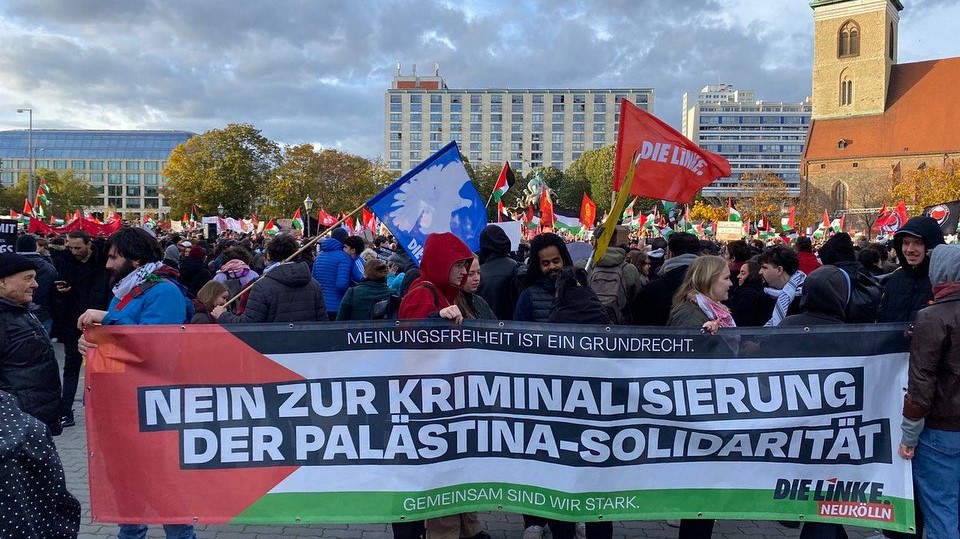
The EU Commissioner for Human Rights, Michael O’Flaherty, has written a strong letter of protest to the German Federal Minister of the Interior, Alexander Dobrindt, urging the German government to ensure the rights to freedom of expression and peaceful assembly for all and to refrain from measures that discriminate against persons based on their political or other opinion, religion or belief, ethnic origin, nationality or migration status. This comes after a number of reports since the outbreak of the Israel-Gaza war that German police had violated protester’s rights and reports of excessive use of force by police against protesters, including minors, sometimes leading to injuries. The EU Commissioner was also concerned to learn that Berlin authorities imposed restrictions on the use of the Arabic language and cultural symbols in the context of the protests. In some cases, marches had been restricted to stationary gatherings. Furthermore, protesters were allegedly subject to intrusive surveillance, online or in person, and arbitrary police checks.
The EU Commissioner for Human Rights complained about restrictions on freedom of expression in such contexts as universities, arts and culture institutions, and schools, and that on Nakba commemoration day, particularly in Berlin 2024, peaceful protesters were arrested, and criminal law provisions were applied to expressions of support for Palestine.
O’Flaherty reminded the German government that according to the Guidelines on Peaceful Assembly prepared by the European Commission for Democracy through Law and the OSCE Office for Democratic Institutions and Human Rights (OSCE/ODIHR) content-based restrictions on assembly must be subject to the most serious scrutiny. Any measures interfering with freedom of peaceful assembly and expression other than in cases of incitement to violence or rejection of democratic principles would do a disservice to democracy and might even endanger it. He asked the German government to ensure the rights to freedom of expression and peaceful assembly for all and to refrain from measures that discriminate against persons based on their political or other opinion, religion or belief, ethnic origin, nationality or migration status.