In the early hours of today Russia invaded Ukraine. Anyone who saw where Putin had placed his troops in Russia and Belarus around Ukraine in the last weeks and had any knowledge of warfare could tell that this would happen. Ukraine had been surrounded by more than 150,000 Russian soldiers, and if it had been only Putin’s wish to invade and conquer the separatist regions Donetsk and Luhansk in the east, his troops would not have been stationed too on the other far side, west of the Ukraine.
Now after it happened – what the US-President, Joe Biden, had announced already last week he was expecting – some observers are stunned, surprised and say this was »unexpected«.
Really?
Where were they all these years since the illegal annexation of the Ukrainian Crimea by Russia in 2014 and the awful atrocities of bombing to death civilians – thousands of innocent children included – in Syria in the past six years?
Well, they should say (would they be honest): »We looked away. Russia was too powerful to be challenged. And if Russia took Crimea, bad, very bad – but naturally we hoped it would stop there. If we let Russia have Crimea, surely Russia would be satisfied?«
Here is where history lessons obviously failed miserably. Because Adolf Hitler played it all before.
The invasion of Poland 1939
After having incorporated Austria into the German Reich and after months of crisis and the threat of war provoked by Hitler, on 30 September 1938 Britain, France, Italy and the German Reich signed the Munich Agreement, which stipulated that Czechoslovakia would cede the Sudeten region to Germany. Hitler succeeded to get the region mainly thanks to his constant declarations that this was his last territorial demand. And the western leaders fell for it. Great Britain in particular believed that the agreement had secured peace in Europe. While Hitler continued his war preparations undeterred.
One year later, on 1st September 1939, Hitler invaded Poland. At 4:45 a.m. the German warship Schleswig-Holstein, that had been on a visit to Danzig, bombarded Polish military positions on the peninsula Westerplatte next to Danzig. Then the Nazi-troops moved into the town.
Already earlier, at 4:37 a.m., the city of Wieluń in the south-west of Poland had been attacked by German fighter planes under the command of Wolfram von Richthofen. The hospital of the town was totally destroyed in the attack, the shocked civilian population was shot at from the air by the planes onboard guns. (At the end of the day around 1,200 civilians would be killed).
Despite this clear attack by Nazi-Germany on an unsuspecting civilian Polish population, Hitler claimed that Poland had attacked Germany, which therefore had to ’defend’ itself. And he announced over radio at 10:10 a.m.:
»Poland has now fired for the first time tonight on our own territory, even with regular soldiers now. Since 5.45 a.m. we are firing back! And from now on, bomb will be answered with bomb!«
All he needed was a pretext to invade Poland. And all he needed to do is create such a pretext with a blunt lie.
History repeats itself
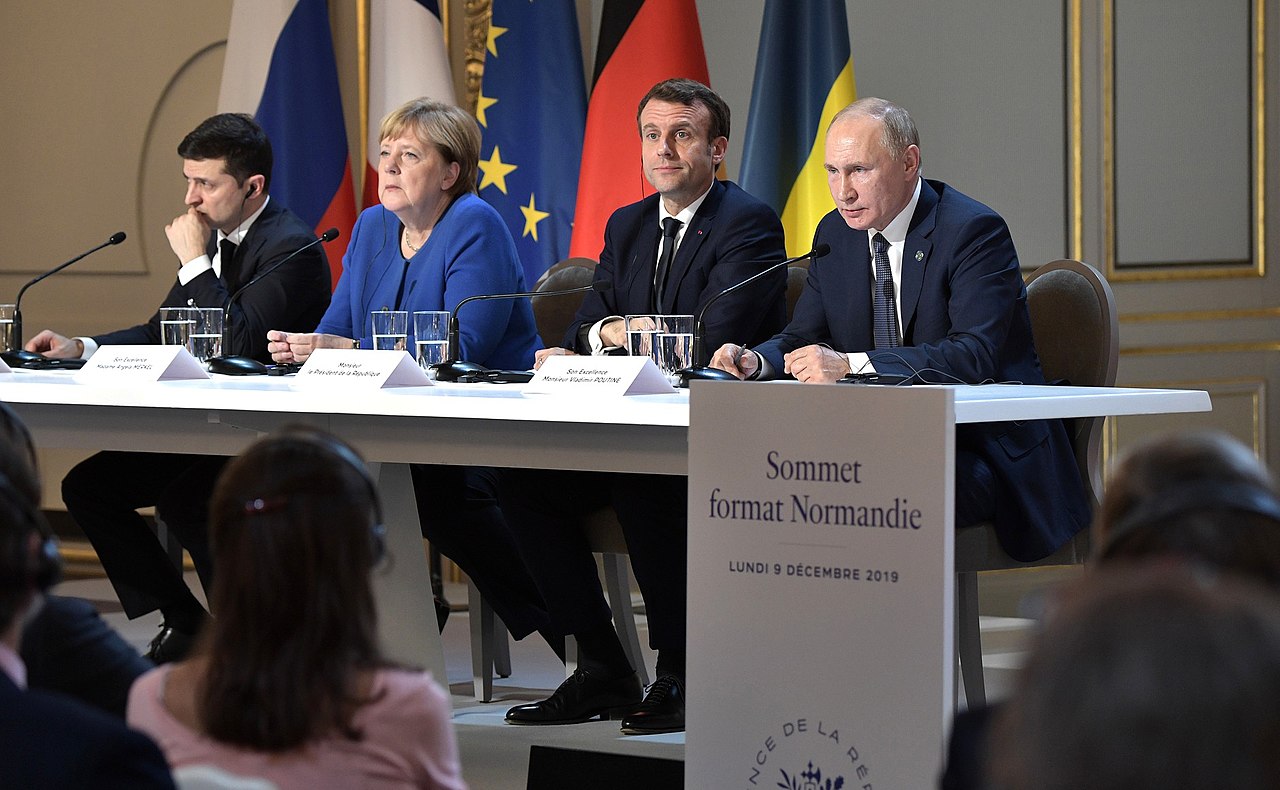
In the early hours of today the Ukraine was attacked by Russia with planes, ships and tanks. Putin declared, this was a »defensive act against the aggression by the Ukraine« – when in fact it was an attack, an aggression by Russia not the Ukraine.
Just as in 1939, when in truth it had been an attack by Nazi-Germany, not Poland.
And while Putin played the Western politicians into believing that annexing Crimea was his ’last territorial demand’, the aggressor in the Kreml prepared for the invasion of all of Ukraine, because the appetite for ultimate power would never be satisfied with only taking a small bite. Hitler proved this already 83 years ago. Putin learned from him. The West did not.
But not only in how wars are started does history repeat itself but too, unfortunately, in how naively and blindly all signs for war are being ignored. It could be seen by the stubbornness with which no one in the West was willing to learn the lesson from the past that if an autocrat wages war (Crimea, Syria) with no respect for the rule of law, the international order or respect for human life, he would turn to wage other wars (Ukraine) – again with no respect for the rule of law, the international order or respect for human life.
Putin did the Hitler. And all he needed was a timid, naive political elite in the West that simply was not willing to believe what they could easily see. Because it was too evil to take. And because evilness just was not part of the ’values’ the West had allegedly decided for itself.
That is why Ukraine in all probability will now fall. It does not have the military strength to withhold Russia’s attacks for very long and the West is not willing to go in to defend the democratic values they so uphold in all their speeches.
That Ukraine is not part of the NATO is the biggest failure of the past as it prohibits the West from bringing in troops to defend the territory against the Russian aggression. In 2008 Ukraine was promised that theoretically it could become a NATO-member but in reality the possibility to membership was blocked, so as not to anger Russia. The mistake made in 2008 paved the way for the attack on Ukraine by Russia today. Thousands of innocent civilians will perish in this war, but the West has nothing in its hand to stop Putin’s aggression because it does not want to resort to the same means as the aggressor. And because it has no legal means now to justify deploying troops into the non-NATO country Ukraine.
What about sanctions?
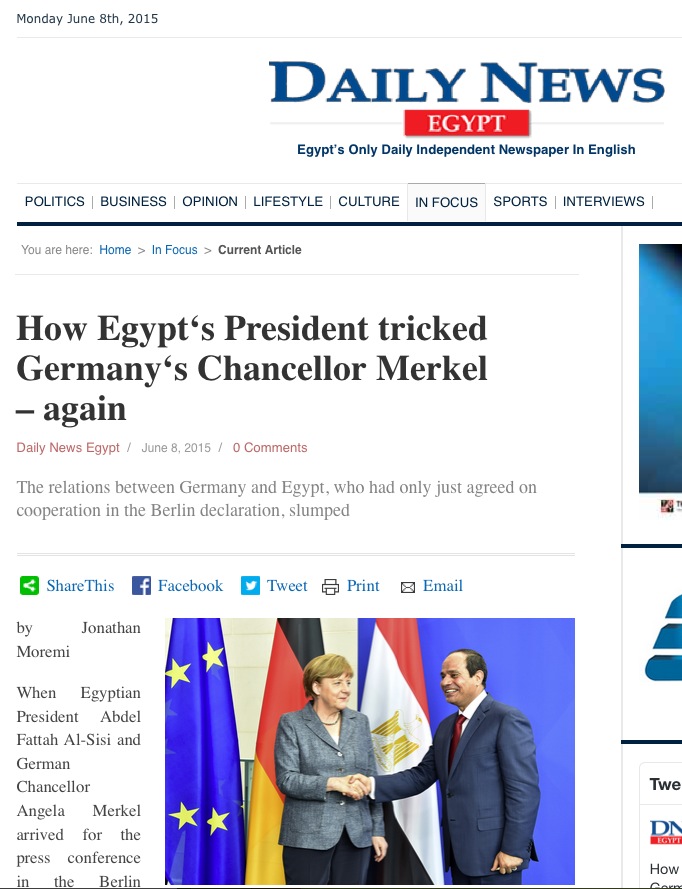
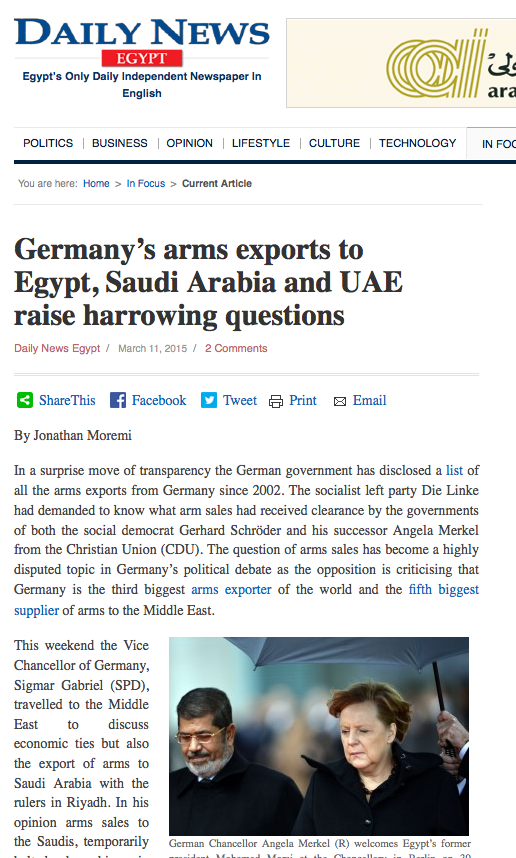
Sanctions that have been and now again are mentioned endlessly by Western politicians as the »strong response to Russia destroying the European peace order« will not deter Putin, in this political observers agree, and will not be able to save Ukraine from falling into the hands of the Russian autocrat. True, the gas pipeline Nord Stream 2 is dead. Now suddenly all the politicians that would not hear of the criticism the pipeline would lead Europe into dependancy of Russia fear exactly that and triumphantly agree that it is the right decision to kill the prestige project of Putin. Why could they not see this earlier when the writing was clearly on the wall? Why did the German chancellor Angela Merkel, who knew Putin allegedly better than anyone, insist for years on pushing this project worth billions of Euros forward despite all warnings? And why has no journalist in Germany so far insisted on getting Merkel to say what she now thinks about allowing Putin to get the upper hand?
Merkel has stayed remarkably silent in the last weeks on the Ukraine crisis and declared today through a spokesperson that she would »not comment on the invasion by Russia«. And no journalist in Germany seems to find any fault with this. It is as if Germany is collectively falling into a guilt complex over the unwillingness to listen in the last years regarding Nord Stream 2.
So what about the effect of economic sanctions? Will this stop Russia in its tracks?
Well, political observers agree here too, saying that Putin has calculated all this in advance to the invasion and will not be deterred by sanctions. As one observer put it: »Only holding a club in one’s hand will stop him from invading.« – But there was no club held in any hand to be seen. And sanctions, many already unsuccessfully imposed since the illegal annexation of Crimea, do clearly not impress the aggressor.
What about SWIFT?
Public discussions are now held to cut Russia off the international banking system SWIFT. With that move no transactions to and from Russia would work anymore, Russia would be literally cut off from the world of finances. Cutting off SWIFT, as one political observer called it, would to Russia come close to »an economic atom bomb«.
How powerful this move would be could be learned in 2014 when cutting off SWIFT was already publicly discussed after the violation against the Crimea. The then Russian Prime Minster, Dmitri Medwedew, a puppet of President Vladimir Putin, reacted enraged to these discussions and said, should the West cut Russia off the SWIFT banking system, Russia would regard this as »a declaration of war«!
Needless to say the idea was put to rest immediately. If the one waging war accuses you of declaring war because you oppose his aggression – then duck, fall silent, tip-toe away. Because who in the civilised West would want to be called a warmonger?! There is a limit surely! – Sadly not to failure.
Therefore the discussion around SWIFT will take a similar development as seven years before. Not least too due to the fact that with cutting off Russia from the SWIFT banking system millions of Euros owed by Russian companies to companies in the West will not be payable anymore. As one observer commented: »Cutting Russia off SWIFT would basically equal a cancelation of Russian debts.« The economical backlash for especially European companies exporting to Russia would be immense, so big in fact, that European politicians fear they would not be able to compensate for it. The result of stopping the invasion and annexation of the Ukraine could thus result in enormous turmoil and unrest in Western countries and no Western government is willing to take this risk. Especially not after the refugee ’crisis’ and the hard hitting two years of the Covid-19 pandemic that have exhausted everyone.
In the end, Russia will get what it wants unless a miracle of courageous fighting back on the part of the West happens. But with all the ducking away, the looking away, the feeble reactions to thousands of civilians slaughtered in (far away) Syria and the stubbornness to continue to do big business with the Russian aggressor – despite him having invaded and illegally annexed Crimea – there is little hope of a miracle happening.
The lessons not learned
What history has taught too: Only if Putin would substantially threaten the Western countries themselves will they take a club in their hand and stop him in his track. Until then, however, the loss once more of European territory to Russia will be grimly accepted, as apparently it cannot be helped. The aggressor is just too evil, and a West that only lives on the idea of economic growth is not adequately equipped to fight back where real weapons are employed.
In his play »Wilhelm Tell«, about the liberation from a ruthless tyrant, the German writer Friedrich Schiller (1759–1805) wrote the now famous phrase:
»The most pious cannot live in peace if the evil neighbour does not like it.«
218 years after the opening night of »Wilhelm Tell« and 77 years after the end of World War II, today sadly no words ring truer than these in Europe. In not little part thanks to a political elite that is just not willing to learn the lessons from the past.