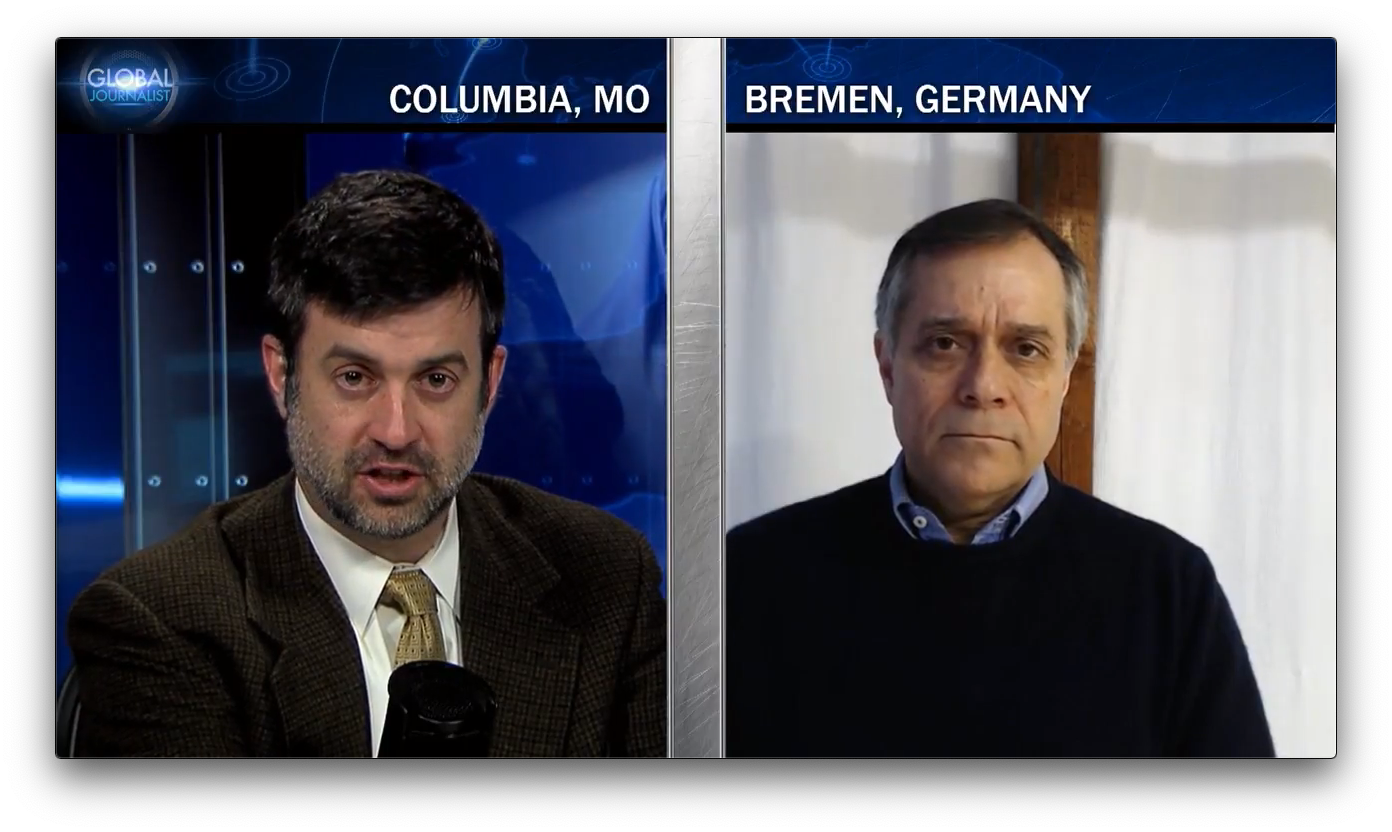
‪Global Journalist: Egypt’s staged election‬

Global Journalist March 8, 2018Egypt will hold a presidential election at the end of this month. But there’s little drama about who will actually win.

President Abdel-Fatah el-Sissi, who led a 2013 coup against the country’s first democratically elected leader, is expected to be handily re-elected. That’s because el-Sissi’s government has arrested or intimidated all viable potential opponents.

That’s left him facing off against one virtually unknown opponent – someone who was actually an outspoken supporter of el-Sissi until just hours before the candidate registration deadline.

So while most observers view this election as a sham – it’s not without drama. After el-Sissi’s coup ended a brief experiment with democracy following the Arab Spring, the country has been going backwards in many ways.

Its economy is stagnant, its population is growing rapidly and there’s virtually no place for people to express discontent. Opposition leaders have been jailed or exiled and independent media has been tightly restricted. Meanwhile the country faces a bloody Islamist insurgency in the Sinai peninsula.

Critics say things are worse even than under former President Hosni Mubarak, who was ousted by street protests in 2011.

On this edition of Global Journalist a look at Egypt’s staged election, and what it may mean for its future and its relationship with the U.S

Joining the program:

*Michele Dunne, director of the Middle East program at the Carnegie Endowment for International Peace

*Sara Khorshid, an Egyptian journalist who has written for Foreign Policy and the New York Times

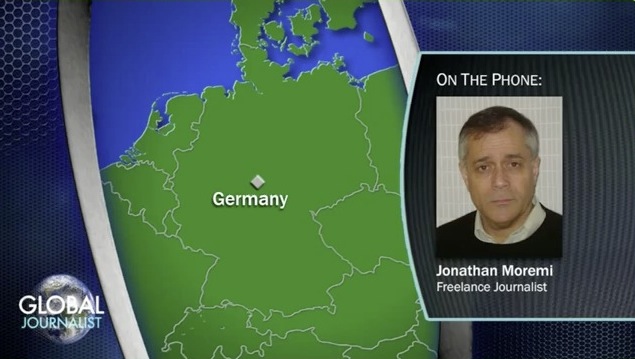
*Jonathan Moremi, an international correspondent who has written for The Daily News Egypt

*Stephen Zunes, professor of politics and international relations and coordinator of the Middle East program at the University of San Francisco
Watch …


‪Global Journalist: Egypt in crisis?‬

Global screen grabIt’s been two years since the Egyptian military ousted democratically-elected President Mohammed Morsi, replacing him with Army General Abdel Fattah Al-Sisi.

 Al-Sisi has promised stability but his time as president has been anything but peaceful. Violence still rages throughout parts of the country, and reporters are being thrown in jail simply for doing their job.

On this edition of Global Journalist, we look at how the country has arrived at this point, and where it’s going in the future.

Our guests this week:

*Stephen Zunes, a professor of politics and the coordinator of Middle Eastern Studies at the University of San Francisco

*Jonathan Moremi, a journalist who’s covered the country for more than 35 years for outlets including Daily News Egypt

*Adel Iskander, a professor of communication at Simon Fraser University in Vancouver and co-editor of the Arab Studies

*Emir Nader, a political reporter for Daily News Egypt

Watch …

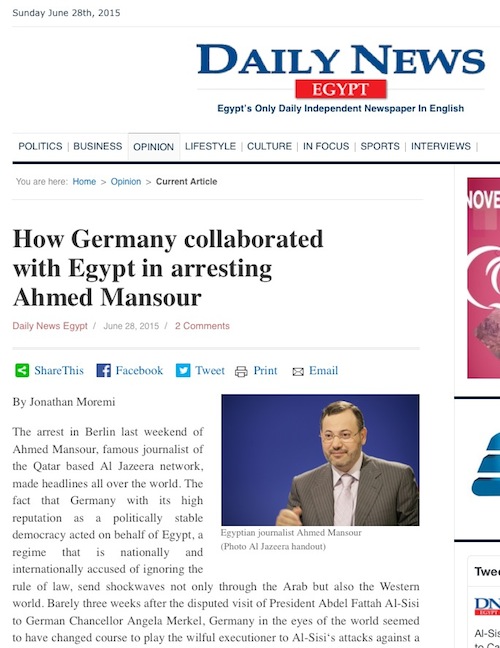
How Germany collaborated with Egypt in arresting Ahmed Mansour

DNE Mansour titleThe arrest in Berlin last weekend of Ahmed Mansour, famous journalist of the Qatar based Al Jazeera network, made headlines all over the world. The fact that Germany with its high reputation as a politically stable democracy acted on behalf of Egypt, a regime that is nationally and internationally accused of ignoring the rule of law, send shockwaves not only through the Arab but also the Western world. Barely three weeks after the disputed visit of President Abdel Fattah Al-Sisi to German Chancellor Angela Merkel, Germany in the eyes of the world seemed to have changed course to play the wilful executioner to Al-Sisi‘s attacks against a free press.

Read more …

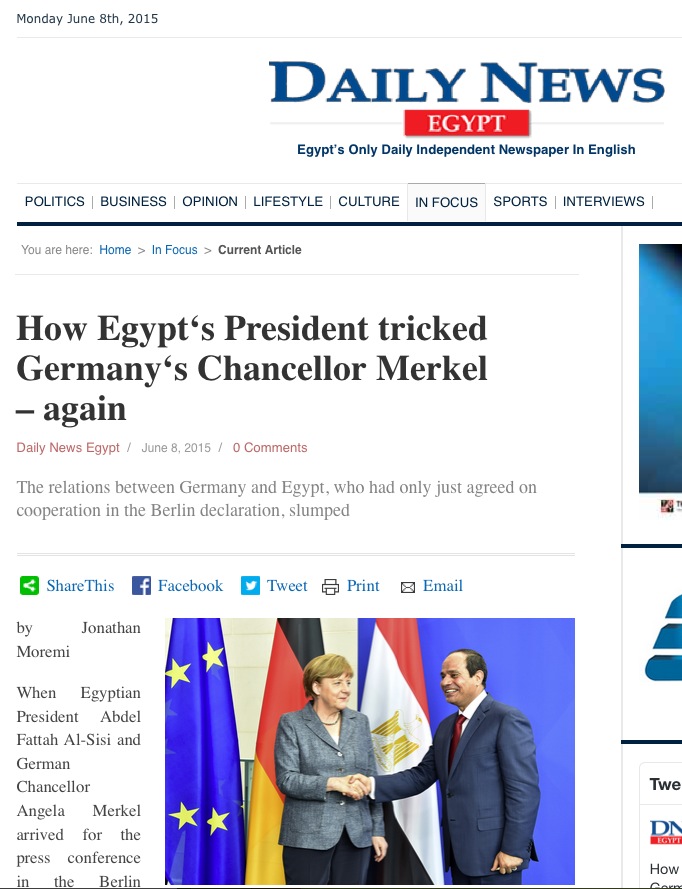
NGO trial: How Egypt‘s President tricked Germany‘s Chancellor Merkel – again

DNE NGO articleWhen Egyptian President Abdel Fattah Al-Sisi and German Chancellor Angela Merkel arrived for the press conference in the Berlin chancellery last week, they were late. “We had a little delay,” apologised the Chancellor, “we had a problem with the elevator. We went up and down several times but finally, with the help of the second elevator, in the end managed to be here.” President Al-Sisi wore a broad grin on his face.

The symbolism of this was not lost on the political observer. For decades, from President Nasser to Sadat and Mubarak, the interim government under SCAF, President Morsi and now Al-Sisi, the relationship between Egypt and Germany has been constantly going up and down, and a chance to find the second elevator to finally reach a mutual position has so far not emerged.

Read more …

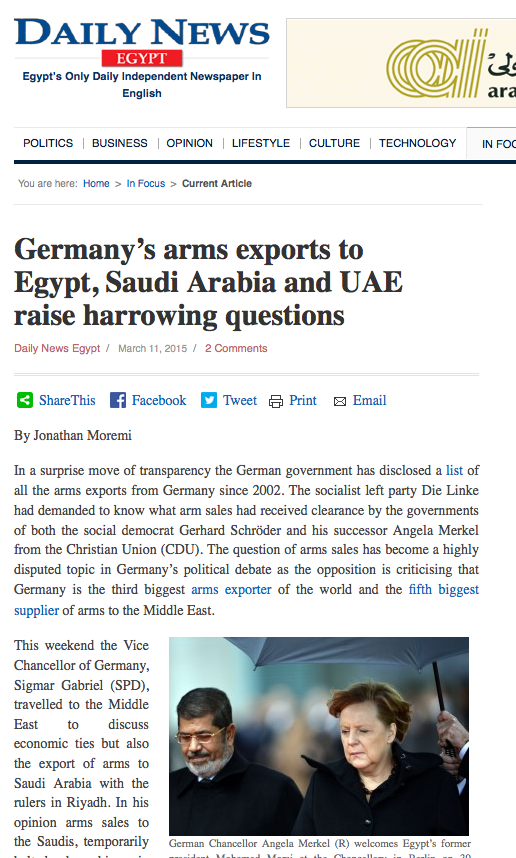
Germany’s arms exports to Egypt, Saudi Arabia and UAE raise harrowing questions

Germany's arms exports picIn a surprise move of transparency the German government has disclosed a list of all the arms exports from Germany since 2002. The socialist left party Die Linke had demanded to know what arm sales had received clearance by the governments of both the social democrat Gerhard Schröder and his successor Angela Merkel from the Christian Union (CDU). The question of arms sales has become a highly disputed topic in Germany’s political debate as the opposition is criticising that Germany is the third biggest arms exporter of the world and the fifth biggest supplier of arms to the Middle East.

Read more …